Last Updated: November 2, 2026
Quick Summary
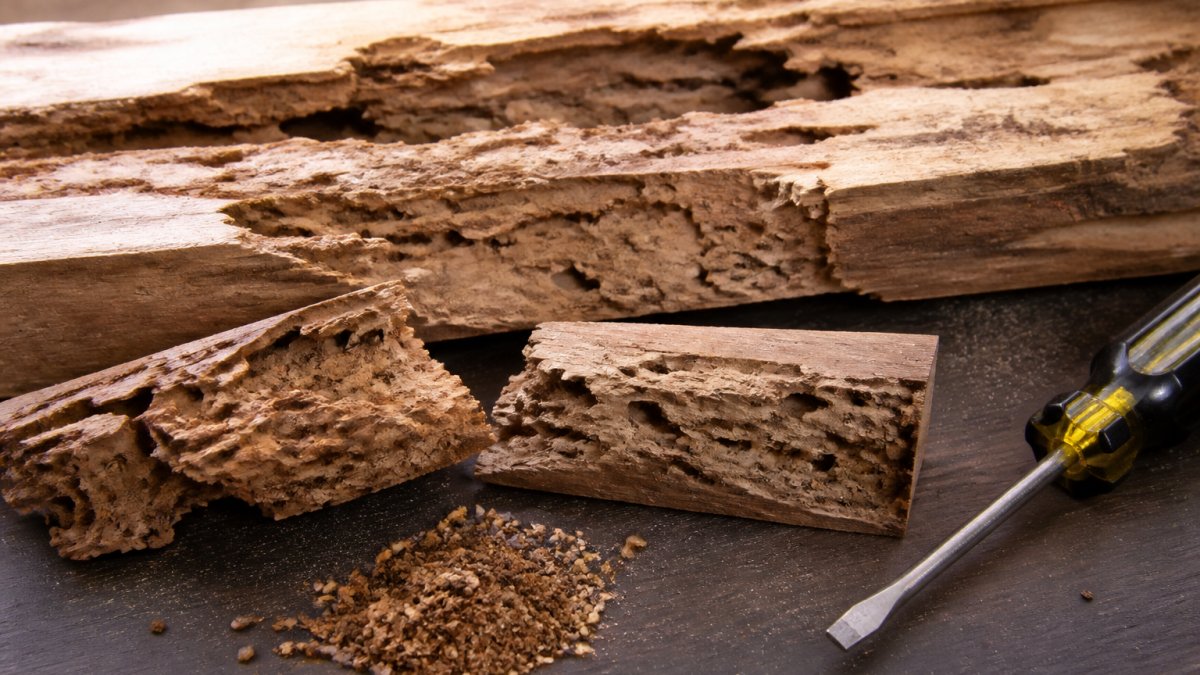
Termite damage on wood often looks normal from the outside because termites eat from the inside out, leaving only a thin layer of paint or veneer. Telltale signs include hollow-sounding wood, narrow tunnels along the grain, mud tubes, and blistering paint. Probe suspect wood with a screwdriver: clean, carved channels point to termites, while mushy fibers point to rot.
Termite damage on wood often looks perfectly normal from the outside, because termites eat from the inside out and leave only a thin layer of paint or veneer behind. That is why the tapping test is the fastest way to reveal hidden voids before you see a single tunnel. Homeowners can grab a screwdriver and tap along baseboards, door frames, and floor joists. A healthy board gives a dull, solid thud. A board that sounds hollow, papery, or drum-like has likely been hollowed out from within.
Press the tip of the screwdriver gently into the wood at the sound. If it sinks in with almost no resistance, the structural wood has been eaten away. What most guides miss is that a hollow sound does not always mean termites; water damage and old carpenter ant activity can produce a similar tone. The difference is what sits inside. Termite galleries follow the grain in clean, carved channels, while rot leaves soft, crumbly pockets. Either way, a void under a painted surface is a warning you cannot afford to ignore.
Split a piece of infested timber open and the internal damage tells the story: narrow tunnels and galleries carved along the grain, often packed with dried mud or soil residue. Subterranean termites build these galleries as protected highways between the soil and your home’s wood, so the tunnels usually run parallel to the wood grain rather than across it. Drywood termites work differently, cutting smoother, cleaner chambers that can cross the grain and leave behind tiny, hard pellets called frass.
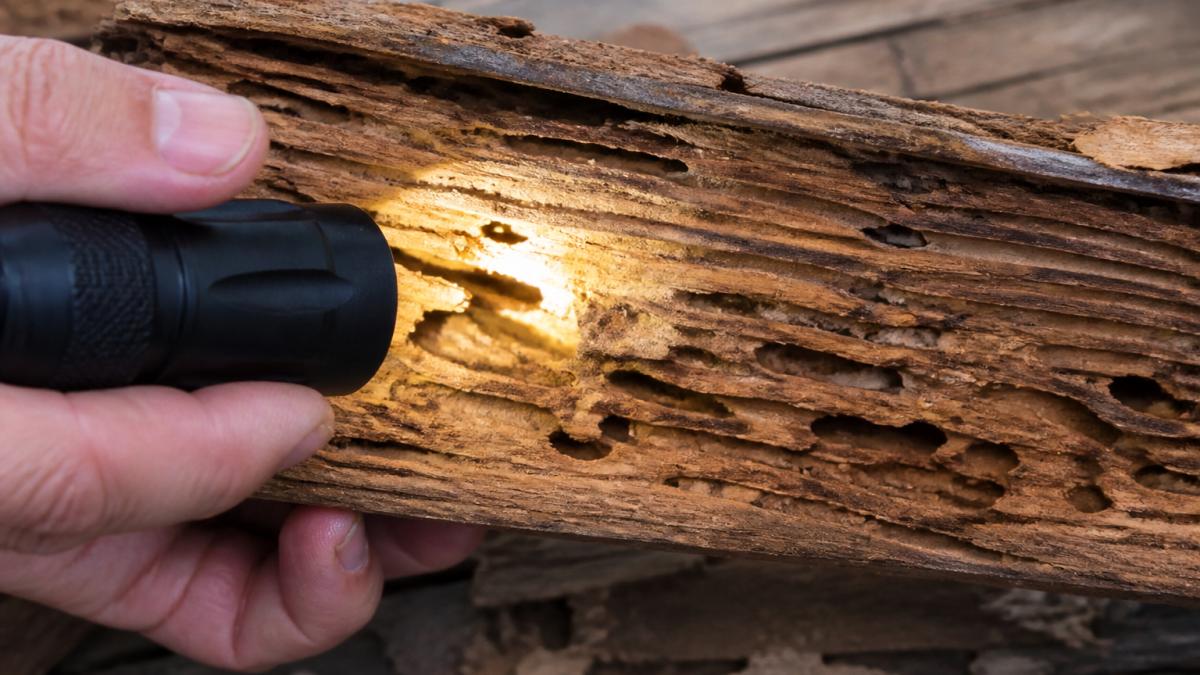
The pattern matters. A hollowed-out core surrounded by an intact shell is a classic sign of termite activity, and it explains why a board can look fine until it collapses under a footstep. When you find tunnels, do not sweep them clean. The condition of the debris inside tells an inspector whether the infestation is old or active, and that distinction shapes the treatment plan.
Wood that crumbles at the touch, splinters without warning, or flexes where it should be rigid has lost its structural strength. Termites eat the soft springwood first and leave the harder summerwood, so damaged timber often has a honeycombed look with thin ridges still standing. Over time the surface may crack, blister, or break away in small pieces.
Watch out: weakened floor joists and rafters can fail under normal weight, so avoid walking across sagging floors or leaning on damaged beams until an inspection is done. Warped floors, doors that suddenly stick, and ceilings that dip are all structural symptoms of hidden damage. If you can push a screwdriver into a beam by hand, that beam is no longer doing its job.
Subterranean termites rarely travel in the open. They build pencil-width mud tubes along foundation walls, piers, and crawl space supports to keep their bodies moist, and dried mud residue often marks the spots where old tubes once ran. Check the exterior foundation, the inside of the crawl space, and any wood that touches soil.
Mud residue inside a tunnel is one of the clearest signs of termite infestation, even when the tube itself has been knocked away. Break a small section of an active tube and you may find live workers inside within a day or two. No mud tubes, however, does not mean no termites; drywood species nest entirely inside the wood and leave no soil behind. That is why a visual check of the foundation is only one part of a real inspection.
Paint that bubbles, blisters, or ripples like water-damaged wallpaper can signal termites feeding just beneath the surface. As termites hollow the wood, the thin painted layer loses its backing and starts to sag or flake. The damage often appears in small patches near baseboards, window sills, and stair stringers rather than across a whole wall.
Here is where homeowners misdiagnose the problem. Blistering paint is also the signature of moisture and water damage, so the paint alone proves nothing. Probe the spot with a screwdriver and look for the telltale galleries underneath. If the wood behind the paint is sound and simply damp, you have a moisture issue. If it is hollow and channeled, termites are the more likely cause.
Click Here To Make Your Payment Online →
Termite damage and wood rot can look alike at a glance, but they leave different fingerprints. Termite-damaged wood is hollowed along the grain and often feels light and papery, while rotted wood is spongy, discolored, and crumbles into soft fibers. Rot usually appears where moisture collects, near leaks, poor grading, and damp crawl spaces. Termites appear wherever wood meets soil or where a colony has moved in.
The two problems often show up together, since damp wood is easier for termites to eat. If you are comparing the two, our guide on stopping floor joists from rotting covers the moisture side in more detail. In practice, the fastest test is texture: pick at the wood with a screwdriver. Clean, carved channels point to termites; mushy, dark, crumbling fibers point to rot. An inspector confirms which one you are dealing with before any treatment begins.
The two problems can look alike at a glance, but they leave different fingerprints.
| Feature | Termite damage | Wood rot |
|---|---|---|
| Texture | Hollowed along the grain, light and papery | Spongy, discolored, crumbles into soft fibers |
| Where it appears | Where wood meets soil or a colony moved in | Where moisture collects, near leaks and damp crawl spaces |
| Screwdriver test | Clean, carved channels | Mushy, dark, crumbling fibers |
Drywood termites live entirely inside the wood and need no soil contact, so their damage looks different from the subterranean kind. Their galleries are smoother and cleaner, often crossing the wood grain, and they push small, hard, seed-like pellets out of tiny kick-out holes. Piles of frass beneath furniture, window frames, or attic rafters are a strong clue that drywood termites are active above.
Run this quick inspection checklist by location:
If you find any of these indicators, do not treat the wood yourself with a store-bought spray. Surface sprays may reach only the termites you can see, while the colony can survive deeper in the structure.
Confirming termite damage by eye alone is risky, because the worst damage is always the part you cannot see. A trained inspector probes structural wood and reads the tunnels and frass so you know what you are dealing with. If you are weighing a professional visit against a DIY approach, our breakdown of pest control versus DIY treatments explains where each one holds up and where it falls short. Before you book anyone, our list of questions to ask before hiring a local pest control company will help you compare providers on the things that actually matter.
Emery Exterminating is a family owned and operated business with over five decades of experience in pest management, moisture control, and mold remediation. Our courteous office staff can walk you through what an inspection involves, and our reasonable rates make it easy to get a straight answer before you commit.
Drywood termites leave smooth, clean galleries inside wood and push out tiny pellets called frass that pile up near kick-out holes. You may also notice discarded wings after swarming season. Unlike subterranean termites, they do not build mud tubes because they get moisture from the wood itself. Look for small holes in furniture, window frames, or attic beams, and check for frass beneath them.
Yes, the two look different. Termite damage usually shows hollowed tunnels and galleries along the wood grain, often with mud residue inside. Water damage tends to discolor and soften wood, causing it to swell, warp, or grow mold. Wood rot from moisture crumbles and feels spongy, while termite-damaged wood may look intact on the surface but sound hollow when tapped. A professional inspection confirms which problem you have.
Early signs include mud tubes on foundation walls, hollow-sounding wood, blistering or rippled paint, and small piles of frass. You might also see winged termites or discarded wings near windows and doors. Sagging floors or doors that suddenly stick can point to structural damage. Catching these signs early limits repair costs, so schedule an inspection if you notice any of them.
Small areas of surface damage may be sanded and sealed, but structural wood that is hollowed or crumbling needs replacement. Structural wood that is hollowed or crumbling typically needs replacement, and the infestation should be stopped before repairs begin.