Last Updated: November 4, 2026
Quick Summary
To stop a musty basement smell for good, find and fix the moisture feeding the mold or mildew before you treat the odor. Check floor drains and the sump pit first, test walls and stored items for dampness, and keep relative humidity between 30% and 50% with a dehumidifier and hygrometer.
A musty basement smell almost always means moisture is feeding mold or mildew somewhere you cannot see. Finding that spot is the whole job. The best approach is to chase the source before you chase the smell. The fastest way to do that is to work through a short decision tree instead of sniffing around at random.
Start at the floor drain and the sump pit. If the smell is sharp, rotten, or sewer-like rather than earthy, the source is plumbing, not mold. A dried-out trap lets sewer gas rise into the room (the CDC). Pour a bucket of water down each floor drain to refill the trap, then smell again the next day. If the odor fades, you found it. If it returns within a week, the trap is losing water faster than it should, and a plumber needs to look at it.
If the smell is earthy and spreads through the whole room, the cause is likely humidity rather than a single wet spot. Press a paper towel against the concrete at the base of the walls, under the stairs, and behind stored boxes. Dry towel plus a room-wide smell points to damp air. Damp towel points to water intrusion at that spot. This one test tells you whether to chase a leak or a dehumidifier.
Cardboard, old rugs, paper boxes, and upholstered furniture soak up moisture and hold it long after the concrete dries. Move anything sitting directly on the floor and smell the underside. If the bottom of a box or rug smells stronger than the wall behind it, the stored item is the source. Remove it and the smell often drops within a day.
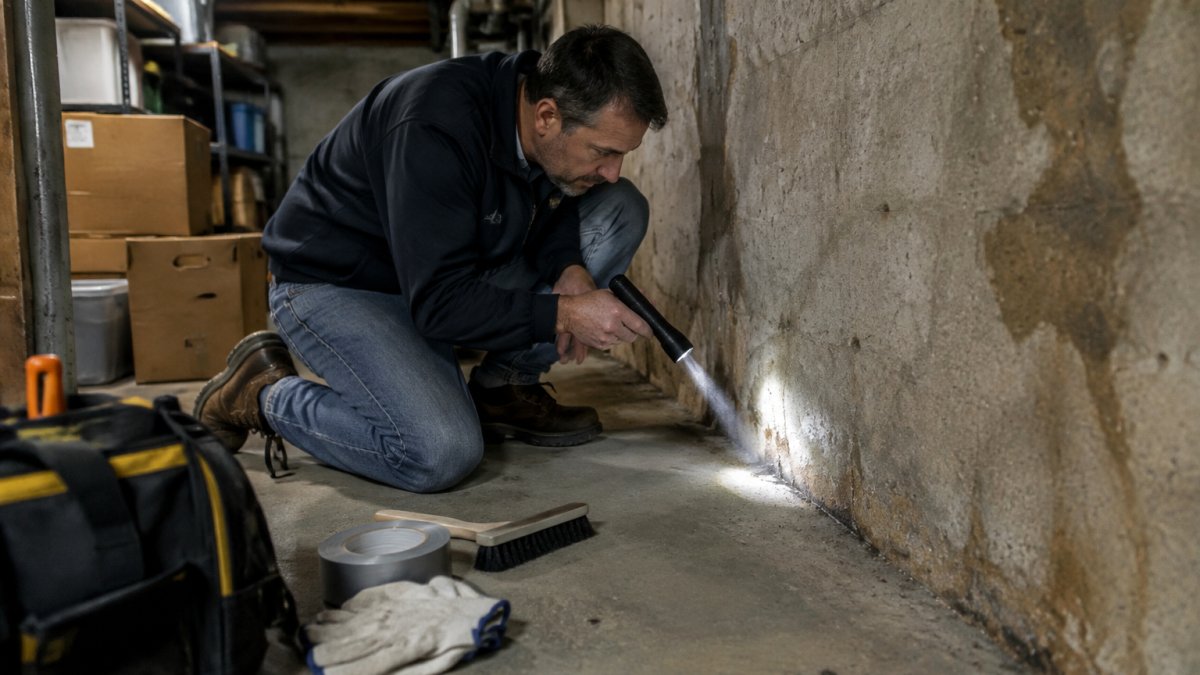
Walk the perimeter with a flashlight and check the base of the walls where they meet the floor, the ceiling joists, and the back of any drywall or paneling. Fuzzy growth, dark staining, or crumbling wood confirms mold or rot at that location. If you trace the smell to damp wood, learn how to stop floor joists from rotting before the damage spreads. And if the wood looks chewed or hollow, check the seven signs of termite damage on wood to rule out pests.
Before you buy any product, set a hygrometer at mid-height in the smelliest part of the basement and check it twice a day for a week. Above 60% relative humidity with no wet materials means the fix is moisture control, not cleaning. Below 50% with a persistent smell means the source is a material or a drain, not the air. Write the readings down so you can tell whether your fix actually worked.
Watch out: do not spray air freshener or bleach over a smell you have not traced. Masking it hides the moisture problem while mold keeps growing behind the surface.
A basement can feel dry and still hold damp air. That is the most common surprise we hear about. The concrete may look fine while moisture hides in the walls, the carpet, or the wood framing.
Relative humidity is the real number to watch. When it climbs above 60%, mold and mildew grow even if nothing feels wet to the touch (the EPA). Porous materials like carpet and drywall soak up that dampness and release the musty smell back into the air.
So the fix is not always a leak. Sometimes it is humidity control.
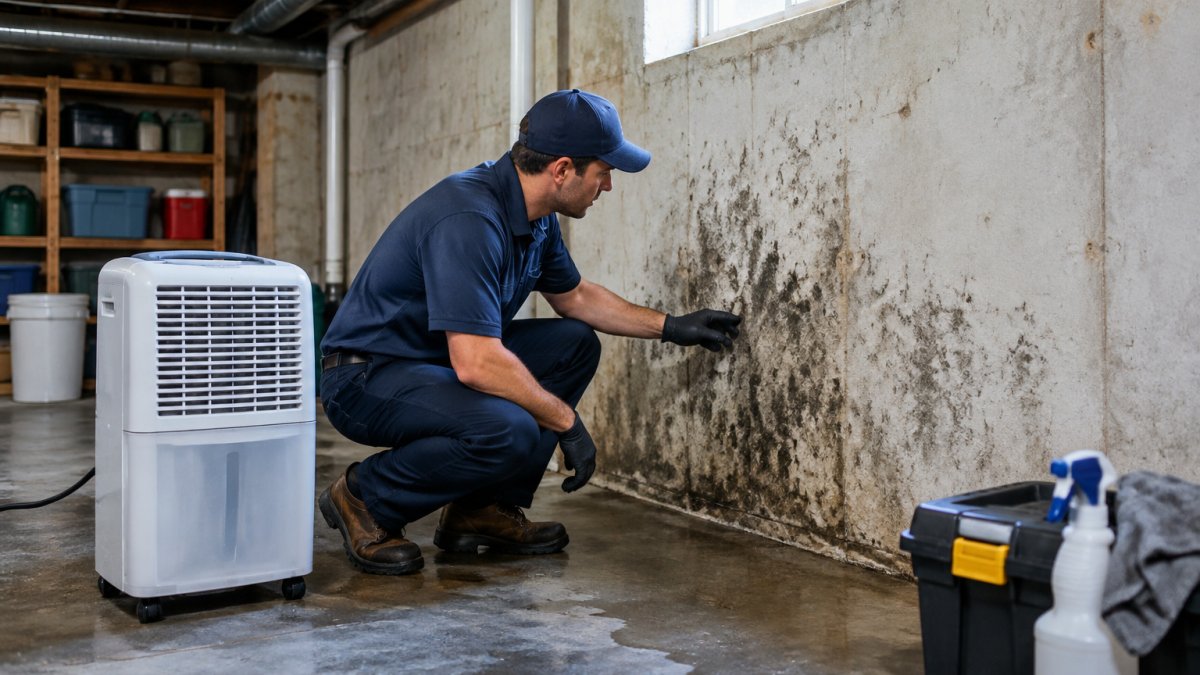
A dehumidifier helps a lot, but it only works as part of the plan. It pulls moisture out of the air, which starves mold and mildew. It will not fix a leak, and it will not clean a moldy wall. Run it in the dampest months and keep the door closed so it is not fighting the whole house.
A unit that is too small runs constantly and never gets ahead of the moisture. Match the pint rating to the square footage and to how damp the space is. A common pattern is to go one size up from the rating for a dry basement when the space smells musty, because the extra capacity pulls humidity down faster and cycles less. Check the label for the pint-per-day rating at the standard test conditions, not the marketing number on the box.
Set the dehumidifier in the dampest corner, not against a wall. Leave at least a foot of clearance on all sides so it can pull air in. If the basement has rooms or a finished section, one unit in the open area will not reach behind closed doors. Run a fan to push air toward the unit, or add a second unit for a separate finished room.
Most units have a hose connection and a built-in bucket. For continuous operation, run the hose to a floor drain or sump pit so you are not emptying the bucket twice a day. If you use the bucket, empty it before it fills, because a full bucket shuts the unit off and humidity climbs back while you are away.
Set the humidistat to 50% and let the unit run. Buy a cheap hygrometer and set it on a shelf at mid-height, away from the dehumidifier’s exhaust. Check it twice a day for a week. Your target is 30% to 50% relative humidity.
Write the readings down. A week of numbers tells you more than one quick check, and it shows whether the unit is actually keeping up.
Watch out: a dehumidifier running nonstop without dropping the reading usually means the moisture is coming in faster than the unit can remove it, so fix the leak or the air path before buying a bigger unit.
Click Here To Make Your Payment Online →
Simple household items handle light surface mildew well. Mix white vinegar and water in a spray bottle. Spray the walls and floor, let it sit, then scrub and wipe dry.
Baking soda works as an odor absorber. Set open boxes in corners and under shelves. Replace them monthly.
Watch out: never mix vinegar with bleach. That combination releases a dangerous gas (the CDC). Use one or the other, never both.
There is no single product that beats fixing the moisture. But the right tool depends on your problem.
| Situation | Best Approach | Why It Works |
|---|---|---|
| Damp air, no visible water | Dehumidifier plus hygrometer | Drops humidity below 60% |
| Light surface mildew | White vinegar spray | Kills mildew on hard surfaces |
| Lingering smell after cleaning | Baking soda boxes | Absorbs odor from the air |
| Smell near a drain | Trap and drain cleaning | Removes the source itself |
| Damp walls or standing water | Professional moisture control | Fixes the cause, not the smell |
Start with the cheapest step that matches your problem.
Sometimes the musty basement smell comes from the plumbing, not the walls. A floor drain or sump pit that dries out lets sewer gas and damp air rise into the room.
Pour a bucket of water down floor drains every few months. That refills the trap and blocks the smell. Clean the sump pit and check that the pump runs.
If the smell is sharp and rotten rather than earthy, call a plumber. That is not mold, and no dehumidifier will fix it.
Call a professional when the smell keeps coming back after cleaning and drying. Also call if you see fuzzy growth on walls, if the wood is soft, or if anyone in the home has breathing trouble.
Testing helps when you cannot see the mold but the smell will not quit. A pro can find the source and fix the moisture feeding it. Wear a mask and gloves for any cleanup, and ventilate the space.
Deciding between handling it yourself and calling in help? Compare DIY and professional treatment results before you spend more time on products that only mask the smell.
Chasing a musty basement smell alone can take weeks of guesswork.
Emery Exterminating is a family-owned business with over five decades of experience, offering moisture management and mold remediation for homes and commercial spaces.
Before you hire anyone, review the questions to ask before you hire a local pest control company so you know what to expect.
Killing the smell means removing what feeds it. Scrub hard surfaces with a diluted white vinegar or mild detergent solution, dry the area completely, and keep relative humidity between 30% and 50% with a dehumidifier. Wash or toss porous items like cardboard, fabric, and old carpet that have absorbed the odor. Baking soda works as a short-term odor absorber in small spaces, but it will not fix an ongoing moisture problem. If the smell returns within days, the source is still active.
Not always, but it is a strong signal. The earthy, musty basement odor comes from microbial growth and damp organic material, and mold spores are often present where that smell lives. You may not see it because it grows behind drywall, under carpet, or inside insulation. Look for discoloration, peeling paint, or warped trim, and address the moisture first. If the smell persists after cleaning and humidity control, have the space assessed rather than assuming it is only stale air.
A dehumidifier only treats the air it can reach. Common reasons it falls short: the unit is undersized for the square footage, the drain line is clogged or the tank fills and shuts off, the set point is too high, or the space is not sealed from outside humid air. Porous materials like carpet, wood, and stored boxes hold moisture and odor even when the air reads dry. Check the unit’s output, empty or drain it daily, and target 30% to 50% relative humidity.
Start with the floor drain and sump pit. A dry plumbing trap lets sewer gas and stale pit air rise into the basement, which reads as musty. Pour a quart of water down floor drains to refill the trap, and check that the sump pit cover is sealed. Next, inspect the base of walls and any penetrations for staining, test humidity with a hygrometer, and smell stored cardboard and fabric. These three checks catch most dry-looking but smelly basements.
Stop guessing at the source of that smell. Get started with Emery Exterminating and get a clear plan for a dry, fresh-smelling basement.